If you’ve ever needed to sign up for a website without sharing your real inbox, temp mail (temporary email) can be a useful solution. With growing concerns around spam, privacy, and data tracking, more users are turning to disposable email services to stay protected online.
But while temp mail can be incredibly convenient, it’s not always the right tool for every situation. This guide explains what temp mail is, how it works, its benefits and risks, and best practices for using it safely.
What Is Temp Mail?
Temp mail (short for temporary email) is a disposable email address that exists for a short period of time—usually from a few minutes to a few hours.
Unlike your regular email account, a temp mail inbox:
- Requires no registration
- Self-destructs after a set time
- Is often publicly accessible (in many services)
These emails are commonly used for:
- Website signups
- Download verifications
- Avoiding spam
How Temp Mail Works
Instant Email Generation
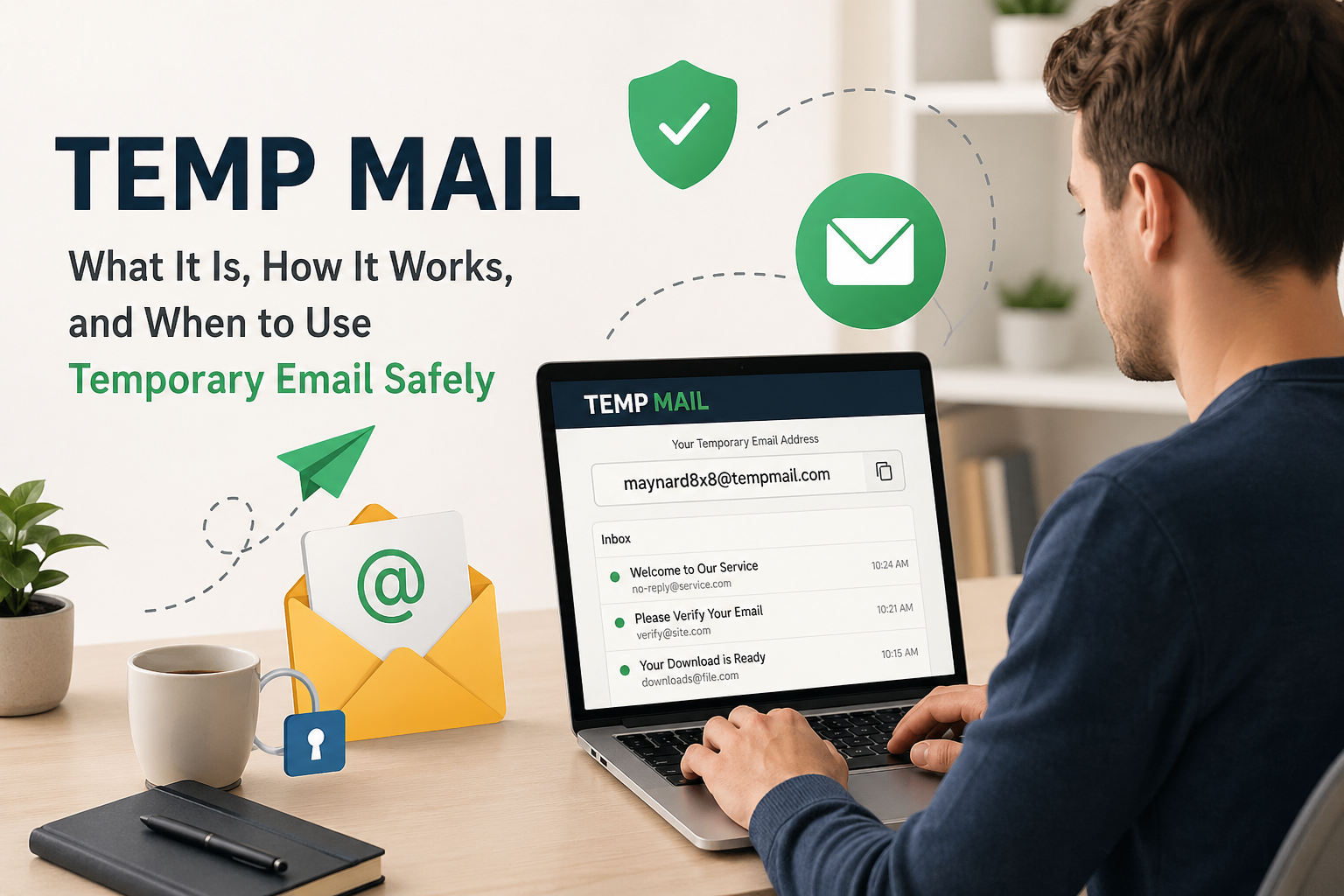
Temp mail services automatically generate a random email address when you visit their site. No signup or password is required.
Receiving Emails
Once generated, the inbox is live and can receive messages immediately. This allows you to:
- Confirm accounts
- Receive verification codes
- Access download links
Auto-Deletion
After a certain time (e.g., 10–60 minutes), the email address and all its messages are permanently deleted.
Benefits of Using Temp Mail
Avoid Spam
Using temp mail keeps your primary inbox clean from unwanted marketing emails.
Protect Privacy
You don’t have to share your real email address, reducing exposure to data breaches, tracking, and identity profiling.
Quick and Convenient
No registration means you can use it instantly for one-time actions.
Risks and Limitations of Temp Mail
Lack of Security
Most temp mail inboxes are not private. Anyone with the same address can access the emails.
No Recovery Option
If you lose access or the email expires, you cannot recover accounts, password resets, or important messages.
Blocked by Websites
Many platforms (especially banks, social media, and e-commerce sites) block temp mail domains.
When Should You Use Temp Mail?
Temp mail is ideal for:
- Testing websites or apps
- Downloading free resources
- Signing up for one-time access
Avoid using it for:
- Banking or financial services
- Work-related accounts
- Long-term subscriptions
Best Practices for Safe Use
Use Trusted Temp Mail Services
Choose services with HTTPS encryption, auto-refresh inbox, and short retention times.
Never Use for Sensitive Data
Avoid entering personal details like your full name, address, or payment information.
Combine with Other Privacy Tools
For better protection, consider using VPNs, private browsers, and ad blockers.
Temp Mail vs. Regular Email
| Feature | Temp Mail | Regular Email |
|---|---|---|
| Setup | Instant | Requires signup |
| Lifespan | Short-term | Permanent |
| Privacy | High (initially) | Depends on provider |
| Security | Low | Higher |
| Recovery | Not possible | Available |
Popular Use Cases in 2026
As online privacy becomes more important, temp mail is widely used for avoiding AI-driven marketing tracking, testing SaaS platforms, and accessing gated content without commitment.
Conclusion
Temp mail is a powerful tool for maintaining privacy and avoiding spam—but it comes with trade-offs. It’s best used for short-term, low-risk activities where convenience matters more than security.
If used wisely, temporary email can help you stay anonymous, protect your inbox, and navigate the web more efficiently.